

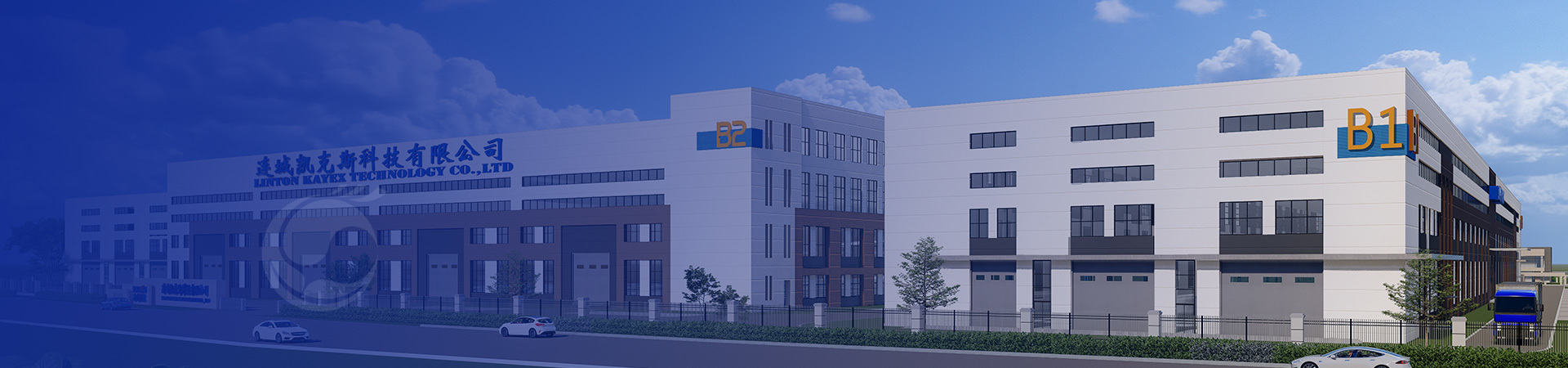
Four R&D bases in the world
Dalian
Dalian R&D Center, Dalian Linton NC Machine Co., Ltd. has established Liaoning Crystalline Silicon Material Engineering Technology Research Center and Dalian Photovoltaic and Semiconductor Silicon Material Cutting Equipment Engineering Laboratory.
It has strong R&D strength in the field of photovoltaic silicon material cutting and processing equipment, and has obtained more than 100 national patents, including more than 10 invention patents.
USA
Dalian Linton NC Machine Co., Ltd. has successfully acquired the KAYEX monocrystalline furnace business division of SPX, a Fortune 500 company in the United States, obtained all the intellectual property rights, trademarks and 18 technical patents of KAX, and retained the main technical R&D teams.
The R&D center has mature technology for R&D and manufacturing of Czochralski single crystal furnace equipment for semiconductor materials such as silicon, germanium, gallium arsenide, indium antimonide, etc.
Wuxi
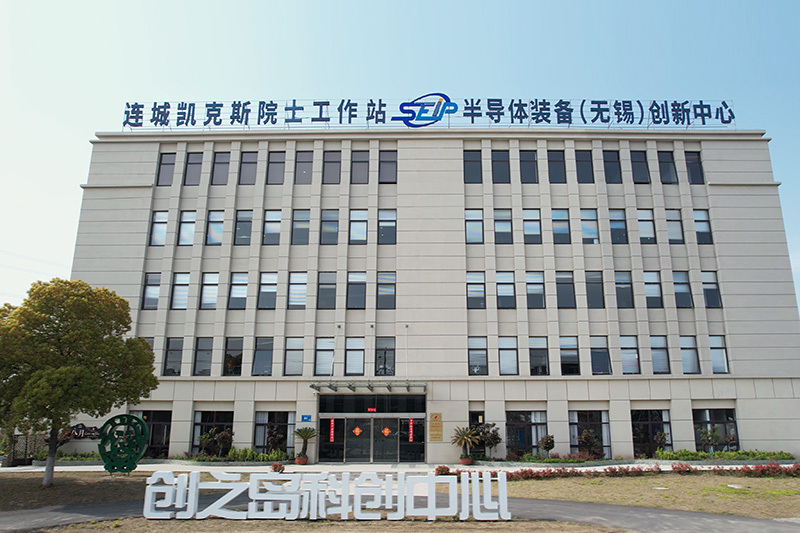
Wuxi R&D center mainly focuses on the R&D and manufacturing of a series of high-end equipment for growing, cutting and grinding, and wafer production of semiconductor material crystals, including silicon materials, gallium oxide, silicon carbide, etc.
The Wuxi Semiconductor High-end Equipment R&D and Manufacturing Base has been officially put into use.
Vietnam
Linton Group’s Vietnam base is located near Haiphong Port, the largest port in northern Vietnam. Vietnam, as a signatory to a number of free trade agreements, provides unparalleled tariff preferences for Linton’s products to enter the international market, and its incentive policies for export-oriented industries, including tax preferences and financial support, will further enhance the competitiveness of Linton Group in the global market.
Cooperative Colleges and Universities
Dalian Linton NC Machine Co., Ltd. has 3 wholly-owned subsidiaries and 23 holding subsidiaries. These include 9 national high-tech enterprises, 3 provincial and ministerial R&D centers, 2 school-enterprise joint R&D centers, and 1 academician workstation.
“Dalian Linton NC Machine Co., Ltd. Customized Class” Joint Talent Training Program
Improvement of sealing and lubrication performance of magnetic fluid in magnetic fluid sealed bearings
R&D Center for Sapphire Crystal Growth Furnace and Processing Gallium Oxide Crystal Growth Furnace and Crystal Growth Technology
Carbon Material Surface Pyrolysis Coating and Purification Process and Equipment Project
The Third Generation of Semiconductor Silicon Carbide Crystal Growth and Equipment
High R&D investment and large-scale Production Capacity
With the mission of “accelerating transformation to green energy in the world”, Dalian Linton NC Machine Co., Ltd. adheres to the concept of “scientific and technological innovation and value creation”, continues to increase R&D investment, and quickly transforms technological innovation into large-scale advanced production capacity.



Cooperative Academician
Yan Luguang
Yan Luguang, born in Beijing on July 6, 1935, is an expert electrician, an academician of the Chinese...
Wang Qiuliang
Wang Qiuliang, born in 1965, Huanggang, Hubei Province, is an expert in strong electromagnetic...
Zhen Chongli
Academician Zhen Chongli is currently an academician of the Australian Academy of Technological...
Yang Deren
目前担任浙大宁波理工学院校长。并担任浙江大学工学部主任,杭州国际科创中心首席科学家。担任国家自然科学...

Dalian Base: No. 40 Yingri Road, Ganjingzi District, Dalian, Liaoning Province
Wuxi Base: No. 15 Jinghong Road, Xishan District, Wuxi, Jiangsu Province
Tel: +86-510-68088419
Stock Code
920368
Dalian Base: No. 40 Yingri Road, Ganjingzi District, Dalian, Liaoning Province
Wuxi Base: No. 15 Jinghong Road, Xishan District, Wuxi, Jiangsu Province
Tel: +86-510-68088419
Stock Code
920368
Copyright©2024 Dalian Linton NC Machine Co., Ltd.

Academician Yang Deren
He is currently the president of NingboTech University. He also serves as the dean of the Faculty of Engineering, Zhejiang University and the chief scientist of ZJU-Hangzhou Global Scientific and Technological Innovation Center. He is the leaders of the innovation research group of the National Natural Science Foundation of China, the innovation group of the Changjiang Scholars Program of the Ministry of Education of China, the innovation team of the key areas of the Ministry of Science and Technology, and the key science and technology innovation team of Zhejiang Province. He is also a member of the overall expert group of the Major National Science and Technology Projects (02), the executive director of the Chinese Renewable Energy Society, the editor-in-chief of Superlattices and Microstructures, and the editorial board member of four international academic journals such as Journal of Silicon, Physica Solidi State, etc.
In 1985, he graduated from the Department of Materials Science and Technology, Zhejiang University with a bachelor’s degree, received a Ph.D. in semiconductor materials engineering from the Department of Materials (State Key Laboratory of Silicon Materials), Zhejiang University in 1991, and was promoted to associate professor at the postdoctoral mobile station of Zhejiang University in 1993. At the beginning of 1995, he went to work at the Freiberg University of Mining and Technology (FREIBERG), and in May 1997, he was specially promoted to professor by Zhejiang University, and returned to China to work at the Institute of Semiconductor Materials (State Key Laboratory of Silicon Materials), School (Department) of Materials in early 1998. In 2000, he was appointed as a distinguished professor in the Changjiang Scholars Program of the Ministry of Education, and in 2002, he was awarded the National Science Fund for Distinguished Young Scholars. In 2017, he was elected as an academician of the Chinese Academy of Sciences.
He has been appointed as the chief scientist of the “National Key Basic Research and Development Program” (973) of the Ministry of Science and Technology of the People’s Republic of China (2006); he has served as a member of the Discipline Evaluation Group of the Academic Degrees Committee of the State Council, a member of the Expert Evaluation Group of the Department of Informatics of the National Natural Science Foundation of China, a member of the Academic Committee of the Chinese Institute of Electronics, a Member of the SEMI China Technical Committee and a Member of the SEMI China PV Committee. He has served as the president of more than 20 international academic conferences (branches) and the international advisory/program committee member of more than 60 international academic conferences. He has been honored with the ninth China Youth Science and Technology Award (2006), “Top Ten Pioneers of the Times” of Zhejiang Province (2006), State Council Government Special Allowance (2010), Special Experts of Zhejiang Province (2011), National Outstanding Science and Technology Workers (2012), National Labor May Day Medal (2016), Model Workers of Zhejiang Province (2016), National Advanced Workers (2020), Elesvier, China Highly Cited Researchers (2014-2021), etc.
Academician Zhen Chongli
Academician Zhen Chongli is currently an academician of the Australian Academy of Technological Sciences and Engineering (ATSE), a professor at the University of New South Wales, and a national top expert.
Research field and professional direction: molecular chemical engineering
Academician Zhen Chongli has proposed and realized the world’s first new technology for the design and synthesis of low-cost nanoparticle materials, and helped many international companies build a number of nanodispersion industrial-scale production lines around the world by exporting this technology or providing process packages, generating more than RMB1 billion of revenue for enterprises. The platform technology has been applied to: (1) the preparation of nano-engineering materials, the development of dispersion technology and the industrialization technology, and the main application fields of related products include: antibacterial coating, anti-ultraviolet aging, photocatalytic degradation of sewage, diesel catalytic combustion supporting, lubricating oil/grease anti-wear and anti-oxidation, wafer precision polishing, sunlight energy saving and consumption reduction, etc.; (2) energy nanocrystalline design, synthesis and industrial-scale preparation technology, which can be used for new catalytic materials for fuel cells and water electrolysis to produce hydrogen (catalysts for HOR/MOR/ORR/HER/OER reactions), lithium iron phosphate particle materials for lithium batteries and new materials for lithium-sulfur batteries, etc.; (3) nano biomedical material technology, mainly including solid nanodispersion oral preparations, nano inhalation agents, skin penetration agents, targeted drug delivery, sustained-release drug delivery systems, etc. At present, two new drugs have entered the clinical trial stage.
Academician Zhen Chongli has innovatively constructed a relatively complete, systematic and large-scale practical technical system and an intellectual property system has published more than 100 academic papers in internationally renowned journals such as Advanced Materials, Advanced Energy Materials, Langmuir, Ind. Eng. Chem. Res., Energy & Environmental Science as the first author or corresponding author, applied for 58 invention patents, and obtained 42 patents, including 17 international invention patents.
Academician Wang Qiuliang
Wang Qiuliang, born in 1965, Huanggang, Hubei Province, is an expert in strong electromagnetic engineering and technology, an academician of the Chinese Academy of Sciences, a researcher and doctoral supervisor of the Institute of Electrical Engineering, Chinese Academy of Sciences.
In 1986, Wang Qiuliang graduated from the Department of Physics, Hubei University;
In 1991, he received a master’s degree from the Institute of Plasma Physics, Chinese Academy of Sciences;
In 1994, he received his Ph.D. degree from the Institute of Electrical Engineering, Chinese Academy of Sciences;
From 1996 to 1997, he worked at the Korea Electrotechnology Research Institute (KERI);
From 1998 to 2000, he worked as a senior researcher at Samsung Advanced Institute of Technology, South Korea;
In 1999, he was selected into the Hundred Talents Program of Chinese Academy of Sciences;
From 2000 to 2002, he worked as a senior engineer at Oxford Instruments, UK;
From 2003 to 2004, he served as a visiting professor at the GSI Helmholtz Centre for Heavy Ion Research;
In 2009, he received the National Science Foundation for Distinguished Young Scholars grant;
In 2016, he was selected into the National “Ten-thousand Talents Program”;
In 2019, he was elected as an academician of the Chinese Academy of Sciences.
Academician Yan Luguang
Yan Luguang, born in Beijing on July 6, 1935, is an expert electrician, an academician of the Chinese Academy of Sciences, a foreign academician of The National Academy of Sciences of Ukraine, an academician of Third World Academy of Sciences (TWAS), an academician of International Eurasian Academy of Sciences (IEAS), a researcher and doctoral supervisor of the Institute of Electrical Engineering, Chinese Academy of Sciences.
In 1959, Yan Luguang graduated from the Electric Power Department, the Moscow Power Institute of the Soviet Union, and then returned to China and joined the Institute of Electrical Engineering, Chinese Academy of Sciences, Beijing, where he successively served as the leaders of the inductance energy storage research group, the fusion electrical engineering research group and the engineering superconducting magnet research group, and the deputy director and director of the applied superconductivity research office.
In 1962, he served as an assistant researcher at the Institute of Electrical Engineering, Chinese Academy of Sciences, and was later promoted to associate researcher, researcher, and doctoral supervisor;
In 1988, he served as the head of the Institute of Electrical Engineering, Chinese Academy of Sciences (until 1999);
In 1990, he concurrently served as the head of the Bureau of Technology and Science, Chinese Academy of Sciences (until 1991);
In 1991, he was elected as an academic committee member of Chinese Academy of Sciences;
In 1992, he was elected as a foreign member of The National Academy of Sciences of Ukraine;
In 1993, he served as the director of the expert committee in the field of energy of the National 863 Program;
In 1999, he served as President of Ningbo University (until 2004);
In 2000, he was elected as a member of the Third World Academy of Sciences (TWAS);
In 2004, he was elected as a member of the International Eurasian Academy of Sciences (IEAS).